What’s Causing the Increase in Area Fatalities and Serious Wrecks?
By Rick McCann
Blue RAM Media/Public Safety Network
October 19, 2026
BALDWIN COUNTY, Ala. Traffic fatalities are sadly on the rise in Baldwin County, as they are once again nationwide.
Even though, U.S. traffic fatalities had been declining following a post-pandemic peak in 2021, indicators point to many factors of why they are once again rising.
In Baldwin County, traffic accidents are investigated by both local police departments and ALEA, depending on where the wreck occurs.
If the wreck is within a city jurisdiction, more than likely, city police will investigate the fatality and report the death to the appropriate authorities.
If the wreck occurs on a county road, which we have many of in Baldwin County, and the town does not have a law enforcement agency, ALEA is dispatched to the scene.
The same is true if the motor vehicle collision occurs on the interstate or a state highway that is not part of a city jurisdiction.
County sheriff departments are sometimes called to assist at a wreck, primarily for traffic control and other assistance, but they do not investigate traffic collisions in most jurisdictions.
We have analyzed traffic wrecks during the past two years in Baldwin County using news reports, public records and a database that we have maintained for the past three years.
Annually, our county records just under thirty fatalities with a few years being much lower, hoovering around 22 or 23.
In Baldwin County, many serious wrecks and those that end in fatalities seem to happen repeatedly in high traffic flow areas including the Baldwin Beach and Foley Beach Express, U.S. Highway 98, County Road 32, and on our rural roads.
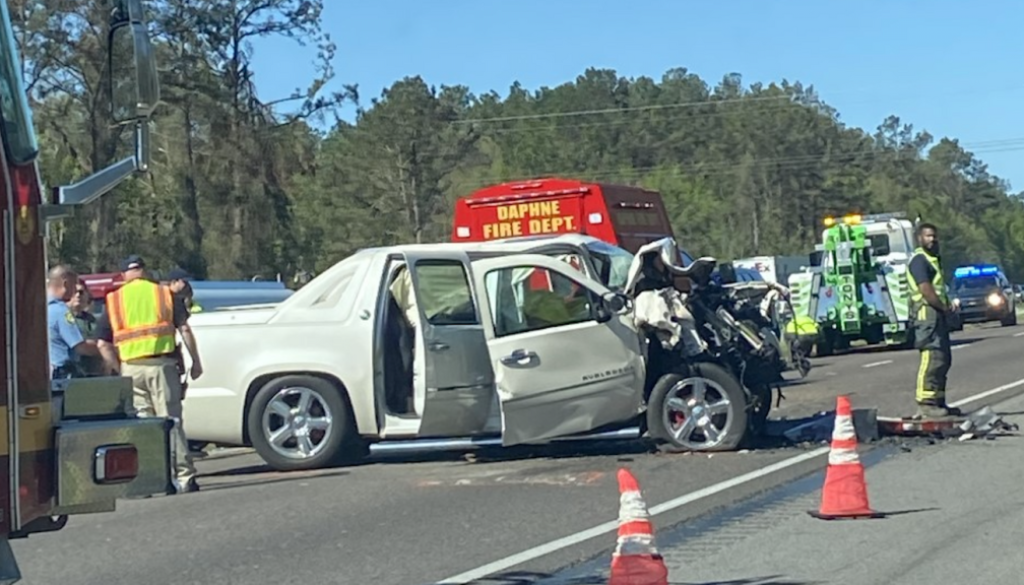
During the past eighteen months, we have recorded numerous pedestrian wrecks and head-on collisions that end in the loss of life.
We have also seen an increase in serious wrecks and fatalities involving large trucks including garbage and cement trucks which are often navigating small two-lane rural roads that are carrying more vehicles than what they were designed for.
Whether it’s a county road or one of our area highways, traffic has become harder to navigate and should take our one hundred percent focus instead of drivers trying to multi-task.
Although law enforcement does not always publicly release the blood alcohol or narcotic level of a person involved in a traffic collision, nationally, the U.S. Department of Transportation (USDOT) and the National Highway Traffic Safety Administration (NHTSA) have reported that alcohol-impaired driving fatalities reached 11,904 deaths in 2024, which accounts for 30% of all traffic fatalities nationwide.
Traffic safety surveys (such as data from the AAA Foundation for Traffic Safety) have also revealed that a large majority of cannabis users (over 84%) drive within eight hours of consumption, and more than half drive within an hour.
Unlike alcohol, which has standardized breathalyzer limits (such as 0.08% BAC), law enforcement faces a lack of universal field tests or agreed-upon numerical blood-level standards to measure acute marijuana impairment at roadside stops.
Nevertheless, some agencies including Daphne Police, ALEA, Fairhope Police and other local enforcement agencies frequently arrest impaired drivers and concentrate as much as they can on keeping our traveling public safe.
Being a tourist destination and having one of the fastest growing counties in the nation, puts many strains on law enforcement including a lack of manpower to be everywhere at the same time.
Our analysis found five reasons why so many serious wrecks are happening, and they align with what law enforcement in other areas of the country have also found.
These include:
Speeding
Inattentive Driving
DUI
Careless/Reckless Driving
Not Obeying Traffic Signals and Stop Signs
Experts and law enforcement agree that preventive measures taken by individual drivers can save lives.
Drivers should stay off the phone, be one hundred percent focused on their driving, obey the rules of the road, don’t drink and drive and drive defensively. Always be prepared to take evasive actions should a vehicle come into your lane, cross in front of you or to avoid debris on the roadway.
Copyright 2026 Blue RAM Media. All rights reserved.
SUPPORT OUR “LOCAL” NEWS
https://bluerammedia.com/DONATE/