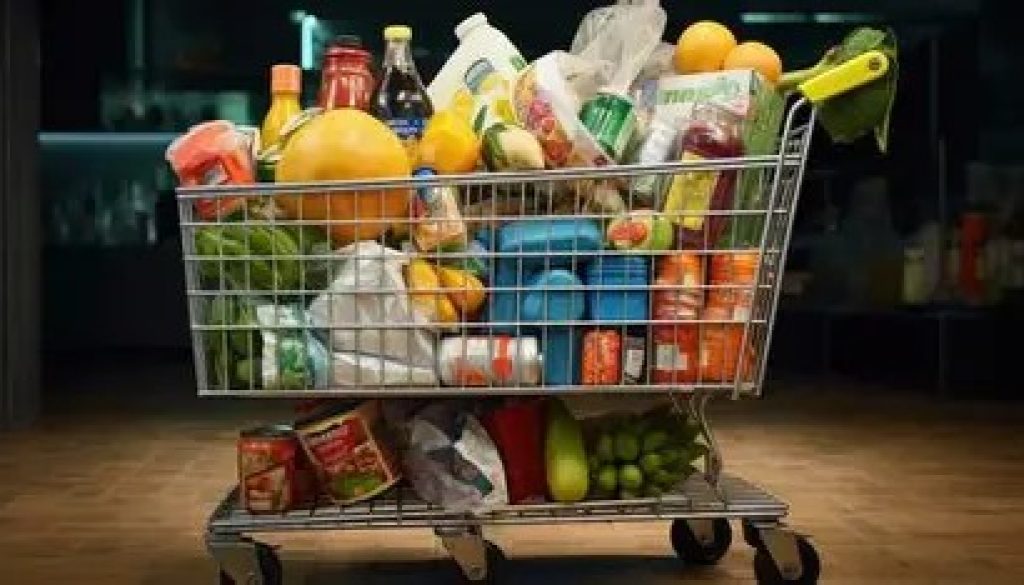
Alabama Listed in Top Ten List of Most Expensive Groceries
By Isabella Gomez
Blue RAM Media/Gulf Coast News
February 17, 2026
GULF SHORES, Ala.
A new study by WalletHub lists the top ten states where shoppers pay more for groceries and probably to no one’s surprise, Alabama made that list.
And another fact that is hard to ignore is the fact that these ten states named for having the highest grocery cost, are also the same states that have some of the lowest wages.
The report found that Alabama households spend 2.33% of their median monthly household income on groceries, placing the state behind only Mississippi, West Virginia, Arkansas, Louisiana, and Kentucky.
While grocery prices have risen sharply nationwide, WalletHub’s findings show that income levels — not grocery prices — are the primary factor driving the rankings.
Other recent studies during the past five years have also shown that consumers living in some of the poorest zip codes not only pay more for their food, but for most goods that they purchase.
Alabama residents spend a higher share of their household income on groceries than people in most other states, ranking the sixth highest nationally, according to the new WalletHub analysis examining grocery affordability across the country.
WalletHub analyzed the prices of 26 commonly purchased grocery items across all 50 states and compared the total cost with each state’s median household income to determine where residents devote the largest percentage of earnings to food.
“While grocery prices have gone up tremendously in recent years, the states in which people spend the greatest percentage of their income on groceries actually aren’t those with the highest prices,” said Chip Lupo, WalletHub writer and analyst. “Instead, the median incomes in these states are quite low, so even with reasonable grocery prices, residents end up shelling out a higher percentage of their earnings than people in states with more expensive products.”
WalletHub reported that grocery prices have increased by nearly 30% since 2019, according to U.S. Department of Agriculture data, while income growth has failed to keep pace and as a result, households in lower-income states like Alabama are spending a larger share of their earnings just to meet basic food needs.
By comparison, residents in states like Massachusetts and New Jersey, which ranked last on the list, spend around 1.5% of their income on groceries, despite often facing higher grocery prices overall.
The states where residents spend the highest percentage of income on groceries are concentrated largely in the South and Appalachian regions, areas that also report some of the lowest median household incomes nationwide.
The top ten states on the list were:
- Mississippi (2.60%)
- West Virginia (2.54%)
- Arkansas (2.44%)
- Louisiana (2.38%)
- Kentucky (2.37%)
- Alabama (2.33%)
- New Mexico (2.30%)
- Oklahoma (2.22%)
- South Carolina (2.21%)
- Tennessee (2.19%)
Data for the study was collected as of January 15, 2026, using information from the Council for Community and Economic Research and the U.S. Census Bureau.
As food costs remain high nationwide, the report suggests income growth — not just price stabilization — will play the biggest role in reducing the share of household budgets going toward groceries.
There is also a different trend occurring in many parts of the U.S. since COVID hit, and that is more people are growing their own food, raising chickens, making their own cheese and depending less on the grocery store.
Copyright 2026 Blue RAM Media. All rights reserved.