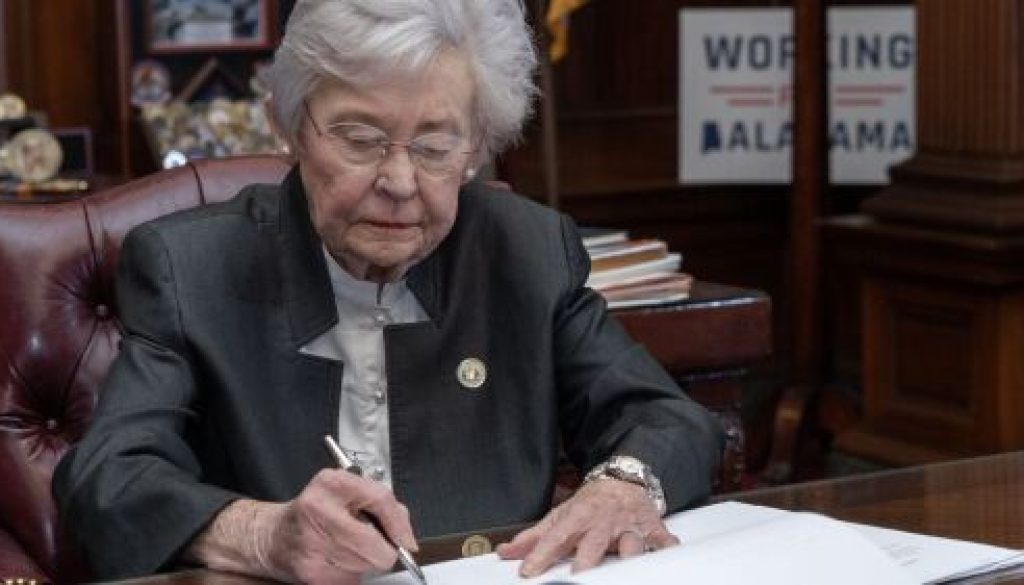
New Bill to Improve Healthcare and Emergency Medical Services Signed by Gov. Ivey
By J. Thomas Wade
Blue RAM Media/Gulf Coast News
April 17, 2026
MONTGOMERY, Ala. In recent weeks, Gov. Kay Ivey has signed new bills into law.
Many were addressing law enforcement and highway construction workers safety.
But she has also signed several bills intended to improve health care and emergency medical services in the state, the governor’s office announced.
And now the Governor has signed another bill covering the areas of EMS treat-in-place reimbursement, and rural healthcare.
The bills were passed during the legislative session that ended Thursday.
They include SB269 by Senate Minority Leader Bobby Singleton, D-Greensboro, which updates payments to ambulance services by health insurance plans.
SB269 will allow ambulance service operators to be paid for providing basic life support without transporting patients, which the bill defines as “treat in place” services.
So if a person has a cut, sprain or other minor medical issues that can treated on scene, an EMS provider will now be able to bill for their services.
Under the previous law, EMS providers were not paid unless they transported a patient to the hospital, even if the patient did not require full emergency department or inpatient care, the governor’s office said.
Removing the patient-transport mandate for reimbursement is expected to increase the availability of EMS care and reduce patient overcrowding in hospitals, the governor’s office said.
Other health-related bills signed by the governor include:
- SB57 by Sen. Arthur Orr, R-Decatur, which requires the Alabama Department of Human Resources to request a federal waiver that would allow the state to ban candy and sugar-sweetened sodas from purchases that can be made with Supplemental Nutrition Assistance (SNAP) cards, also called food stamps. Alabama joins 22 other states that are seeking such a waiver.
- SB9 by Sen. Gerald Allen, R- Cottondale, adds a vaping prohibition to the state law that bans smoking in enclosed public places.
- HB300 by Rep. Frances Holk-Jones, R- Foley, requires that health benefit plans pay or reimburse for breast examinations, including mammography, without imposing a deductible, copayment, or coinsurance charge on the patient.
- HB605 by Rep. Jamie Kiel, R- Russellville, helps rural healthcare providers collaborate by providing limited immunity from state and federal antitrust laws. The purpose is to maximize efficiency and to sustain and expand healthcare services in rural areas.
- HB156 by Rep. Paul Lee, R- Dothan, streamlines license approval of out-of-state physician assistants to practice in Alabama, attracting more medical professionals to serve patients in the state. Alabama is the 24th state to approve the compact, joining Tennessee and Arkansas in the South.
Ivey said the legislation will help the state benefit from the rural healthcare federal funding for states that was included in the “One Big Beautiful Bill” approved by Congress and President Trump.
Alabama received $203 million for the first year of the five-year Rural Health Transformation Program.
“In December, I announced Alabama’s participation in a new Trump Administration program funded by the ‘One Big Beautiful Bill’ passed by Congress to expand rural healthcare delivery,” Ivey said in a press release Wednesday.
“Not wasting a moment, I worked with legislative leaders this session to remove legal barriers to ensure healthcare providers are able to work together to improve healthcare delivery in our rural areas.
“We have also freed first responders to deliver more life-saving services during ambulance calls, and we have joined other states in streamlining approval of out-of-state physician assistants to practice in Alabama.
“We are promoting healthier diets for Alabama SNAP beneficiaries by restricting the purchase of sugary foods that contribute to obesity and diabetes.
“These efforts along with several other pieces of legislation lay a solid foundation as we partner with the Trump Administration in improving rural healthcare delivery to better meet the needs of the public.”
Alabama Governor Kay Ivey’s current and final term ends in January 2027.
Copyright 2026 Blue RAM Media. All rights reserved.