More Data Centers Setting Up Shop in Alabama But Is That Good?

By Rick McCann
Blue RAM Media
October 13, 2025
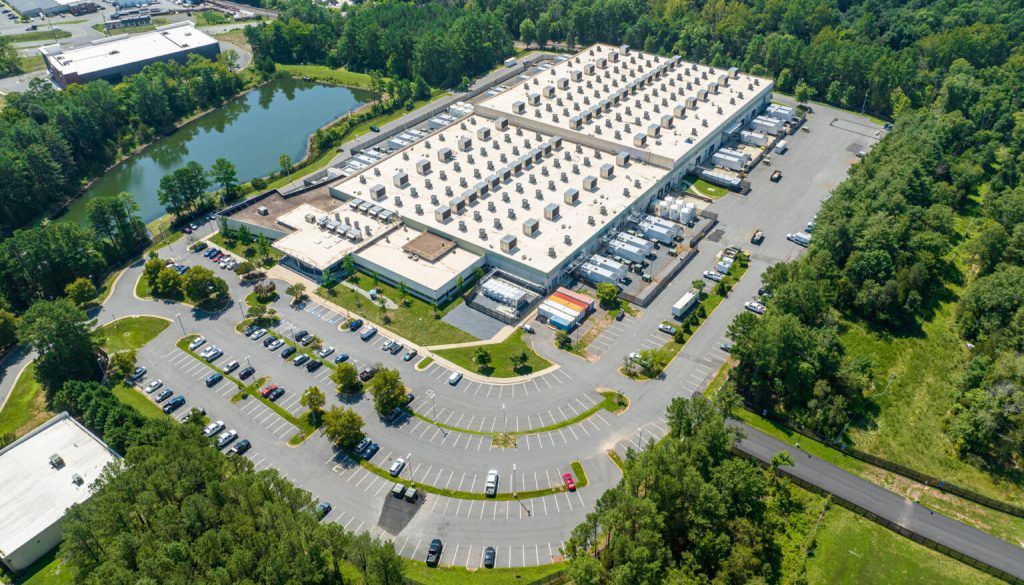
BIRMINGHAM, Ala. A company named Nebius has just bought 79 acres in Birmingham in a $90 million deal to build a new data center.
The company, which already has data storage facilities in other states, and it’s said that they are planning to build its newest location in Jefferson County.
All of this sounds good for the State of Alabama. No doubt it will bring some jobs, opportunities and more revenue to the state.
But is this really the type of business that’s good for the state?
Earlier this year, Meta announced a new 715,000-square-foot data center would be built off Interstate 65, across from the Hyundai automotive assembly plant. It will join the company’s other Alabama data center campus, located in Huntsville.
Alabama is already home to twenty-six large data campuses and some of the largest and most notable is located in Huntsville (Meta) and Bridgeport (Google). Other major providers with a presence in the state include DC BLOX and AUBix.
Nationwide, data centers employ only a few handful of employees at each data center while most of the work is done by robots, electronics and automation.
While a specific total number of employees currently working at Alabama data centers isn’t available, Alabama’s data center employment is growing and includes over 300 operational jobs at the Meta facility in Huntsville, 100 operational jobs planned for a Meta facility in Montgomery, and 20 planned full-time jobs for a Core Scientific data center in Auburn.
Data centers typically employ fewer people than many other industries after construction, but the jobs are often higher-paying, and the overall sector is expanding due to increasing demand for cloud computing and AI services according to national data resources.
However, there are hidden problems with data centers not only in Alabama but across the country.
Besides the fact that data centers only employ a few dozen people at each facility, they also eat up a large percentage of electricity that is produced by local power companies and
In 2023, U.S. data centers consumed approximately 176 terawatt-hours (TWh) of electricity, which is about 4.4% of total U.S. electricity consumption. This figure represents a significant increase from 2014, when data centers consumed around 70 TWh. The growth in energy consumption is projected to continue, with estimates suggesting that data centers could consume between 325 to 580 TWh by 2028, potentially accounting for up to 12% of U.S. electricity use. The increase in energy consumption is driven by the growing demand for data center internet services, particularly the integration of artificial intelligence technology.
Some areas with large numbers of data centers have already experienced electricity interruptions and issues that are on the rise.
Data Centers have high Around-the-Clock Energy Demand, and their computers run 24 hours a day, 7 days a week and 365 days a year and there’s no denying that data centers consume an immense amount of power. This power usage is primarily driven by servers/computing and cooling systems, followed by usage for networking equipment and storage drives.
AI data centers, one of the primary drivers of the explosive demand, are different. Due to constant demand for their use, AI operations have sustained high levels of power needs and demand power availability in excess of 99.9%. Such a level of availability is more than a single generation source (or the grid) can generally provide, and thus redundant power supplies are typically required.
Recent incidents involving data centers have highlighted the potential for brownouts and blackouts due to their significant power consumption. These events have been caused by data centers disconnecting from the grid, which can lead to a surge of excess electricity on the grid. The grid operators have had to take drastic action to prevent widespread outages, indicating the need for better preparedness and infrastructure to handle such events.
In many areas of the country, power production is already strained by population growth and extending services to a large area.
Sixty data centers in Northern Virginia using 1,500MW of power dropped off the grid simultaneously last summer, forcing the network operators to take drastic action to avoid widespread blackouts in the region.
The near-miss incident, revealed in regulatory filings and first reported by Reuters, saw the data centers in Fairfax County all switched to backup generators en masse as a result of an equipment fault on the grid.
Grid operator PJM Interconnection and local utility company Dominion were forced to quickly scale back the volume of energy going into the network from power stations. If left unattended, such a rapid increase in the amount of available power could have triggered a surge and caused systems to trip out, potentially leading to blackouts across Virginia.
Northern Virginia is the world’s busiest data center market and continues to attract new developments despite constraints on the grid.
High density population growth, straining systems already having difficulties in production and delivery of power services and the continual demand for constant data center power, could be the results of catastrophic long term power outages.
Copyright 2025 Blue RAM Media. All rights reserved.